“Is there a way to test for metal allergies at home?”
“I would like to do a patch test for metal allergies myself.
Is it possible only at medical institutions (clinics)? “
“Isn’t there a test kit that allows you to test for metal allergies yourself?”
We often receive such inquiries and consultations.
So today, I would like to write about the methods of patch testing for metal allergies that you can do yourself, what you can and cannot do, and simple methods.
What is a metal allergy patch test?
Even if you say metal allergy, depending on the type of metal, the metal that reacts and the metal that does not react, and the strength of the reaction also differ from person to person.
So, the metal allergy patch test is a way to find out which metal reacts.
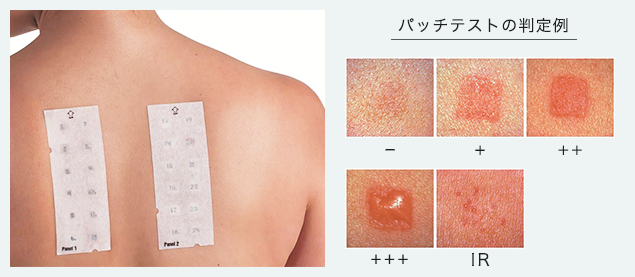
Specifically, gauze impregnated with each metal reagent is applied to the skin and followed up for 48 hours (2 days), and in some cases 4 days to 1 week to check for inflammation and rashes. watch.
Medical institution that can perform metal allergy patch test
The patch test for metal allergies is covered by insurance at a dermatology hospital, and you can take it for about 1080 yen at a cost of 30%.
Nippon Medical School Hospital
1-1-5 Sendagi, Bunkyo-ku, Tokyo
TEL: 03-3822-2131
Yamate Clinic
2-28-11 Daizawa, Setagaya-ku, Tokyo
TEL: 03-5431-5228
Hif Family Clinic Tokimi
3-1-13 Ueda, Matsubara-shi, Osaka Sunrise Building 2nd floor
TEL: 072-330-5743
Fujita Medical University Bantane Hospital
3-6-10 Otobashi, Nakagawa-ku, Nagoya-shi, Aichi
In addition, the number of medical institutions that test for metal allergies is increasing recently, so you can find it by searching for the keyword “region name patch test”.
However, since it is necessary to visit the hospital multiple times, such as 2 days and 4 days after the first day of the test and the week of the test period, it may be difficult to use when the medical institution is far away.
Can I buy a patch test kit?
Then, is it possible to inspect by yourself without getting a medical institution?
If you look for a patch test kit, you will find products with two test kits.
Sato Pharmaceutical’s Patch Test Panel ® (S)
https://medinfo-sato.com/patch-test-panel/
Torii Pharmaceutical patch test
https://www.kegg.jp/medicus-bin/japic_med?japic_code=00045917
The above medical institutions also use one of these test kits.
Sato Pharmaceutical’s Patch Test Panel ® (S) is a kit for testing not only metal allergies but also contact dermatitis in general, including natural resins and synthetic resins.
To list the components of the reagent,
- 1. Nickel sulphate
- 2. Lanolin alcohol
- 3. Fradiomycin sulfate
- 4. Potassium dichromate
- 5. Cainmix (ethyl aminobenzoate, dibucaine hydrochloride, tetracaine hydrochloride)
- 6. Fragrance mix (α-amylcinnamaldehyde, isoeugenol, cinnamic aldehyde, eugenol, cinnamic alcohol, hydroxycitronellal, geraniol, oak moss)
- 7. Rosin (refined pine fat)
- 8. Parabenmix (methyl paraoxybenzoate, ethyl paraoxybenzoate, propyl paraoxybenzoate, butyl paraoxybenzoate, benzyl paraoxybenzoate)
- 9. Balsam of Peru
- 10. Gold sodium thiosulfate
- 11. Cobalt chloride
- 12. p-tert-butylphenol formaldehyde resin
- 13. Epoxy resin
- 14. Carbamix (diphenylguanidine, zinc diethyldithiocarbamate, zinc dibutyldithiocarbamate)
- 15. Black rubber mix (N-isopropyl-N’-phenylparaphenylenediamine, N-cyclohexyl-N’-phenylparaphenylenediamine, N, N’-diphenylparaphenylenediamine)
- 16. Isothiazolinone mix (5-chloro-2-methyl-4-isothiazolin-3-one, 2-methyl-4-isothiazolin-3-one)
- 17. Mercapto, benzothiazole
- 18. Para-phenylenediamine
- 19. Formaldehyde
- 20. Mercapto mix
- 21. Thimerosal
- 22. Thiram mix
There are 22 types.
References / References:
https://ci.nii.ac.jp/naid/10030755910/
http://www.pieronline.jp/content/article/0039-2359/240060/538
https://www.info.pmda.go.jp/go/pack/7290707T2025_1_04/
Of these, the only reagents involved in metal allergies are nickel sulfate, potassium dichromate, gold, sodium gold thiosulfate, and cobalt chloride, cobalt.
Although it is sold on the ePharma website, it cannot be purchased without a doctor’s prescription because it is a prescription drug.
Torii Pharmaceutical’s patch test is widely used as a patch test for metal allergies. The inspection items are the following 17 metals.
- 1. Aluminum (aluminum chloride)
- 2. Cobalt (cobalt chloride)
- 3. Tin (second tin chloride)
- 4. Iron (ferric chloride)
- 5. Platinum (platinum chloride acid)
- 6. Palladium (palladium chloride)
- 7. Manganese (manganese chloride)
- 8. Indium (indium trioxide)
- 9. Iridium (iridium tetrachloride)
- 10. Silver (silver bromide)
- 11. Hexavalent chromium (potassium dichromate)
- 12. Trivalent chromium (chromium sulfate)
- 13. Nickel (nickel sulfate)
- 14. Zinc (zinc chloride)
- 15. Gold (gold chloride acid)
- 16. Copper (copper sulfate)
- 17. Mercury (mercury chloride)
However, it seems that it is only sold to medical personnel.
What if you buy a kit that allows you to test for metal allergies at home online?
Another patch test called T.R.U.E.TEST® from Pharmacia of Sweden, which is the basis of Sato Pharmaceutical’s patch test panel® (S), can be found under the product name SmartPractice Dermatology | Allergy. The inspection items are the same as Sato Pharmaceutical’s Patch Test Panel ® (S). The same is true for reagents. It seems that some can be purchased from overseas sites.
Here etc.
→ https://www.smartpractice.com/shop/category?cn=Products-T.R.U.E.-TEST&id=508222&m=SPA
Basically, if a problem occurs, it should not be worse if you remove the patch and wash it off, but it seems that there are side effects such as leaving marks, so it is still a doctor’s decision to test for metal allergies. I think it’s better to do it in the original.
How to paste and test a piece of metal yourself
- The content described below is not a formal method by a medical institution, so please use it at your own risk. We are not responsible for any troubles.
If you just want to find out which metal is reacting, you can actually stick the metal on your skin with a bandage and see if it causes inflammation or a rash.
Therefore, the 17 types of metals that are tested in the metal allergy patch test are as follows, among the metal products that are readily available.
Aluminum is a one-yen coin.
Cobalt is hard to find in familiar things, but it is a metal that is very prone to metal allergies in the first place, so it is better to avoid it. If you dare to mention it, the carbide tip contains cobalt and is used for the cutting edge of electric saws.
Ten-yen coins are familiar to tin. Since the 10-yen coin also contains copper and zinc, you may need to look at the copper wire for testing only copper and the dual 5-yen coin of copper and zinc. However, both zinc and tin are very prone to metal allergies and should be avoided.
Iron is iron sand, nails, and so on.
Platinum is hard to find around you, but you can get platinum foil online for craft use.
Similarly, palladium is hard to find around you, but you can get palladium foil online for craft purposes.
Manganese is hard to find in familiar things, but it is a metal that is very prone to metal allergies in the first place, so you should avoid it.
Indium is hard to find in familiar things. I think it’s rare to come into contact with it in everyday life.
Iridium is also hard to find. Suffice it to say, shavings are generated when we make iridium rings, so we can hand them over to those who wish.
Silver is familiar with silver accessories, but since copper is mixed in the accessories of 925 silver, it is not possible to accurately determine whether it is due to silver even if an allergic reaction occurs. Silver leaf is available online for nails and crafts. Since silver leaf is sterling silver, only silver can be tested purely.
Hexavalent chromium is highly toxic and should be avoided even if you are not allergic to metals. I think it is not necessary to take out hexavalent chromium and perform a contact test.
Trivalent chromium is a plated product. For example, plastic that shines silvery is chrome-plated plastic.
Nickel is familiar with 100-yen coins and 500-yen coins.
Five-yen coins are familiar to zinc.
Gold is hard to find around you, but you can get gold leaf online for food and crafts.
Copper is easy to find because the copper wire of the power cord is pure copper.
Mercury is a liquid metal that comes out when you break a thermometer in familiar things, so this is mercury, but since mercury is highly toxic in the first place, I think that you should avoid it even if you are not allergic to metal.
I’ve listed them like this, but you don’t have to test everything, for example, trying five types of platinum, palladium, gold, silver, and copper isn’t enough for a typical jewelry allergy test. I think.
For example, you don’t have to stick something that is toxic and apparently itchy, such as nickel, cobalt, or heavy chromium, which many people develop metal allergies, just imagine sticking it for a week. Isn’t there some people who are horrified?
If you search for an image of “metal allergy patch test”, you will find many images with a red swelling on your back in the patch test, but I am wondering if you need to continue the test because you know that you have a metal allergy.
Personally, I think it’s better to check for metals that do not develop, rather than searching for metals that develop.
We will give you a test piece of jewelry material.
We do not recommend that you try the metal allergy patch test yourself, but for those who really want to try it, we will hand over the jewelry material as a “strip”.

From the left
・ 18K yellow gold (alloy of 75% gold, 12.5% silver, 12.5% copper),
・ Platinum 900 (alloy of 90% platinum, 10% palladium),
・ Iridium split platinum Pt900-Ir100 (alloy of 90% platinum and 10% iridium),
・ Ruthenium split platinum Pt950-Ru50 (alloy of 95% platinum and 5% ruthenium)
・ Silver 950 (alloy of 95% silver and 5% copper),
・ Pure iridium cutting powder,
There are 6 types.
The five on the left are about 3 mm square x about 0.1 mm thick, and are cut out by rolling the actual material.
Since it is actually used as a material for wedding rings, such as ruthenium, which is not included in patch tests by medical institutions, the material itself is used as a sample.
Since it is a precious metal material, it costs 6,000 yen (excluding tax) for a set of 6 types, but I think it is exceptional than getting one foil at a time. Also, since it is thicker than the foil for crafts, it is adjusted to a thickness that is easy to handle without tearing.
If you wish, please contact us.
By the way, do you really need a metal allergy patch test??
At our company TOKYO DIAMOND, we make jewelry with metal materials that are completely safe for metal allergies, such as tantalum and hafnium, without having to perform a patch test for metal allergies.
Regarding whether or not a metal allergy patch test is necessary,
Is it true that you should do a patch test for metal allergies??
I wrote in detail in this column along with the advantages and disadvantages. Please read it.