“I couldn’t wear a silver ring because of a metal allergy.”
“The 925 silver ring makes it itchy in the summer, doesn’t it?”
“I have a metal allergy to silver earrings and I like it so is there a way to wear it?”
Many people come to consult us like this.
So today, I would like to talk more about silver and silver metal allergies.
What is silver? What is Silver 925?
Silver is a metal with an atomic number of 47, an element symbol of Ag, and a specific density of 10.49.
The reflectance of sterling silver is 98%, making it the whitest and most brilliant metal of all metals. However, it has the property of being sulfurized by sulfur contained in hot springs and sweat and turning black, and it is difficult to maintain the white shine.
The purity notation of silver is expressed in 1000 divisions, and 925 silver means 925/1000, that is, silver with a purity of 92.5%. The remaining 7.5% is copper.
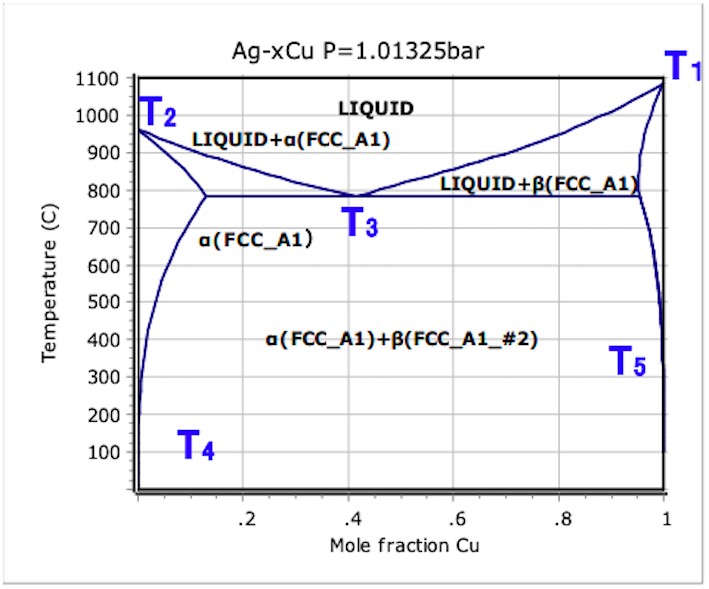
Source: Phase diagram of eutectic Ag-Cu alloy
Silver products in the world, especially accessories, are often made of this silver 925, and silver castings are made of silver 925. Silver 925 is also called sterling silver.
By the way, Silver 950 is often used in the works of one-of-a-kind metal engraving artists. Silver 950 has 95% silver purity and 5% copper. The silver 950 is easier to engrave than the 925, and the silver 950 is less likely to cause discoloration called “fire unevenness” due to repeated heating, so it is preferred by engravers.
The great thing about 925 silver
When you hear that silver is 92.5% pure, you may think that the remaining 7.5% is a mixture, but in the world of accessories, most silver is treated with a purity of 925 silver. There is a reason to be told.
When viewed as a material for silver products, 925 silver is far superior to 100% pure silver (Ag1000).
Here are some of the advantages of 925 silver over sterling silver:
Hard and durable, resistant to deformation. High holding power of jewels
It has springiness. After some deformation, it returns to its original shape.
High wear resistance. Hard to wear
Good flow during casting (melting), easy to make precise castings
Difficult to make shavings during casting. (In sterling silver, oxygen that is solid-dissolved during melting is released with cooling, and it is easy for sterling silver to occur.)
Since it has age hardening properties, it will harden even if it is heated or dull, just by leaving it.
These are characteristics that sterling silver does not have. Silver 925 is preferred in the world of silver products (especially in the world of silver casting accessories) because of its improved properties, even with a small amount of copper mixed in.
The famous chrome hearts, fashion brand silver jewelery, those sold on the street, and those engraved with 925 silver are all made of the same silver 925.
Does Silver 925 Cause Metal Allergies?
Now, do silver and 925 silver cause metal allergies?
In fact, silver is a metal that, in its purest state, is extremely unlikely to cause metal allergies. Statistically, there is even data that sterling silver is less likely to cause metal allergies than pure gold.
However, the story is different when it comes to silver 925. It seems that the 7.5% copper mixed in is often the cause of metal allergies.
The following is a list of the susceptibility of metal materials to metal allergies.
The most prone to metal allergies
Nickel, nickel-containing alloys (nickel silver, etc.) and nickel-plated products,
bronze
Brass
Chrome-plated products
Iron-based alloys such as iron and steel
Aluminum and various aluminum alloys (duralumin, etc.)
Metals that should be avoided by those who are sensitive to metal allergies
palladium
Shape memory titanium alloy (titanium and nickel alloy)
White gold (alloy of gold and palladium)
Silver 925
Silver 950
Pink gold
Stainless steel (SUS304)
Platinum 900 (Platinum mixed with 10% palladium)
Surgical stainless steel (SUS316L)
Platinum 950 (Platinum mixed with 5% ruthenium)
Metallic material that is less likely to cause metal allergies
Pure platinum
18K yellow gold
22K Yellow Gold
Sterling silver
pure gold
Metallic material without worrying about metal allergies
Pure titanium
Pure zirconim
Pure hafnium,
Pure niobium,
Pure tantalum
hey are lined up like this.
This is in the order of trends, and there are individual differences. However, even if the order is changed within the group that has been divided into groups, I think that the order is rarely changed beyond the group.
Therefore, the susceptibility to metal allergies of silver 925 and silver 950 of silver accessories is safer than cheap plated accessories, but it is wise to avoid those who are sensitive.
About metal allergies of Eternal Silver, White Silver, and Germanium Silver
It is known that silver changes its color to black “smoked silver” when left unattended.
This is a discoloration caused by the generation of silver sulfide by body fluids such as sweat and sulfur contained in hot springs. Also, with the addition of copper, such as 925 silver, discoloration is more likely to occur.
This discoloration of smoked silver can be said to be the charm of silver, but many people avoid it. Therefore, each jewelry production company is working hard to develop alloys, and has released silver that is “hard to discolor” under the names such as Eternal Silver, White Silver, and Germanium Silver.
These are alloys that prevent the discoloration of silver, mainly by mixing palladium. Some are mixed with platinum and some are mixed with ruthenium. Germanium silver is a mixture of palladium and germanium.
Silver, which claims to be resistant to discoloration, contains palladium in almost all cases, so those with metal allergies should be careful. Although there are individual differences, silver containing palladium is more likely to have metal allergies than silver 925. I think you should check the ingredients when purchasing.
Palladium is a highly functional metal as an additive, but there are many problems with reports of metal allergies. You can read more about palladium metal allergies in this column.
→ Column: There are increasing reports of metal allergies to palladium.
Two measures when you have a metal allergy to silver
Metal allergies basically do not get worse if you remove the metal that causes them, so remove them first.
On top of that, if you still like the silver accessory and want to wear it, there are two options below.
1. Use a coating for metal allergies.
2. Replace with another metal that does not cause metal allergies. Remake.
As for coating agents for metal allergies, etc. are sold at amazon, so you can apply it so that the metal parts do not come into direct contact with the skin.
One of the advantages of coatings for metal allergies is that they are cheap, easy to wear, and you can wear the same accessories almost as they are.
The disadvantage is that it is a coating and will come off after a while. Especially the polished metal surface is slippery and the coating is easy to peel off.
You can try it at a low price, so I think it’s a good idea to consider it as a first aid measure and try it. Also, if you do not spare time, you can avoid troubles by reapplying it frequently.
If you want to replace it with another metal, choose the metal below in the above order.
By the way, those who develop metal allergies with 925 silver tend to develop metal allergies even with 18-karat gold, which also contains copper, so be careful.
For example, in the case of pierced earrings, it is effective to replace only the posts and hoops with pure titanium. Even in the case of necklaces, it is effective to replace chains and fasteners that come into direct contact with the skin with pure titanium.
reference:
Pure titanium post
→ https://amzn.to/2VQjPxZ
Pure titanium hoop (hook)
→ https://amzn.to/2Yo987E
Pure titanium chain
→ https://amzn.to/2VVjg69
Pure titanium fasteners
→ https://amzn.to/3d1VniS
→ https://amzn.to/2KNH8lF
Coating agent (metal coat)
→ https://amzn.to/35nddKo
100% metal allergy-free material
There are metals that you don’t have to worry about metal allergies at all.
That is a metal called tantalum.
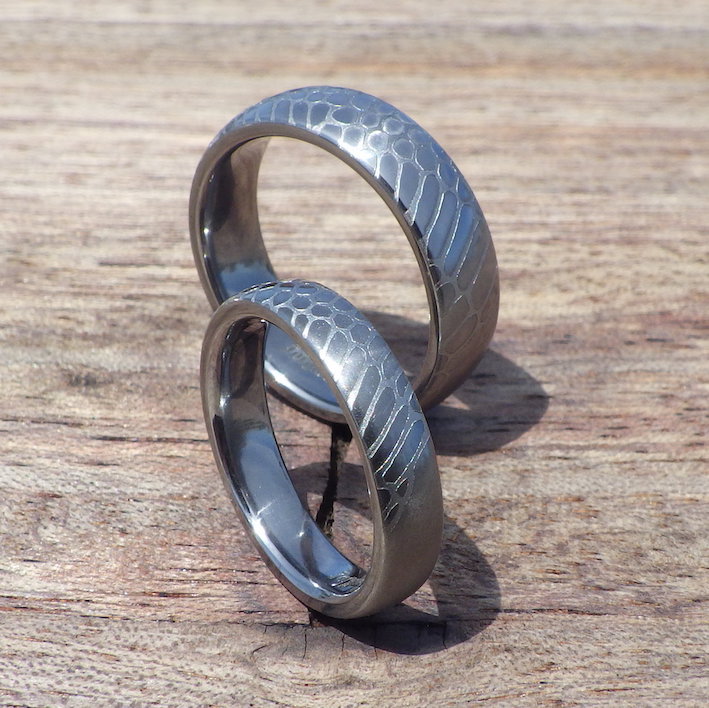
Although it is an unfamiliar name, it is a rare metal with a very low yield.
Tantalum is insoluble in any acid, alkali or chemical, including human sweat, so metal ions do not elute. Of course, there is no discoloration or dullness even when immersed in hot springs or seawater.
It is rare and difficult to process (melting point is amazing 2996 ° C!), And few companies can process it as jewelry, but in the medical field, it is used for artificial bones, surgical sutures, catheters that pass through blood vessels, etc. It is a highly safe metal that is well known for its high biocompatibility.
If you have metal allergies to gold or platinum, don’t worry if you use tantalum. Even atopy people do not get worse by wearing tantalum (except for factors other than metal allergies, such as sweat and dirt, of course).
As a matter of fact, we have been consulted about metal allergies and have been making rings using this tantalum for nearly 10 years, but there are no cases of metal allergies.
Tantalum is a black metal that is highly malleable like gold and is similar in weight and properties to gold. Unlike gold, only the appearance is black, so if you guess the Chinese character, you can call it black gold, or black gold, and I think you’re guessing the nature well.
The heavy atmosphere, which is a little different from Ibushi silver, is popular regardless of metal allergies.
However, the price will be several times that of silver, so I think anyone can buy it, but it is a wonderful and finest material for wedding rings and jewelry of a living thing.