Recently, a customer came to us saying, “I was wearing surgical stainless steel earrings and had symptoms of metal allergies.”
Also, I sometimes hear people say, “The part that the surgical stainless steel touches is somehow itchy.”
Many of the accessories on the market claim that “surgical stainless steel is safe for metal allergies”, and is it okay to claim that surgical stainless steel contains a lot of nickel? I have been thinking for a long time.
There are various ways of saying things such as “difficult to get metal allergies”, “corresponding to metal allergies”, and “safe for metal allergies” on the Internet and online shops. That is said to be vague.
Therefore, I would like to explain the metal allergies of surgical stainless steel based on the correct knowledge of metals.
Why do metal allergies occur?
To put it simply, metal allergy is a condition in which the metal that comes in contact with sweat or body fluids is corroded and melted, causing the body to have an excessive immune response.
Excessive immune response causes swelling, redness, itching, eczema, and sores.
In addition, metal allergies caused by clothing often occur only around the area where they are attached, but metal allergies caused by dental metals such as metal coverings for dental treatment and implants dissolve metal ions, which are the causative substances, from the mouth. It is known that it is absorbed by the digestive organs and circulates throughout the body to spread throughout the body.
Reference paper:
Metal allergy and systemic contact dermatitis: an overview
Three points to prevent metal allergies
The process of becoming a metal allergy can be considered in three stages.
- Metal comes into contact with sweat, body fluids, and saliva.
- When it comes in contact with sweat, body fluids, or saliva, the metal is corroded and dissolves as metal ions.
- The body overreacts to metal ions.
Metal allergies always go through these three processes, so if you can block one of them, you will not have any symptoms.
It’s easy to say, but it’s quite difficult to actually do it.
This is because the world is full of metal products, and most metals have the drawback of rusting (= corroding).
Preventing metal at the stage of “touching sweat, body fluids, and saliva” in 1 means avoiding contact with metal at all.
It is certain that you will not wear metal, but there is also a method of applying a resin coating to metal products (the coating does not just keep it permanently). You can also replace the dental metal with ceramic.
Preventing at the stage of 2 “Metal is corroded by touching sweat, body fluid, and saliva and dissolves as metal ions” means selecting a metal that does not ionize even if it comes in contact with sweat, body fluid, and saliva.
Not all metals are corroded by sweat or body fluids, and there are metals that do not corrode (that is, metals with high corrosion resistance).
Titanium is famous, but other metals such as tantalum, hafnium, zirconium, and niobium do not corrode. In addition, gold and platinum are also hard to corrode metals. What about Surgical Stainless? Speaking of which, it is a category that is relatively hard to corrode. I will write in detail after this.
Preventing at the stage of 3 “The body overreacts to metal ions” is a method to prevent by improving the constitution. Those who do not become allergic to metal are those who have a constitution in which the body does not overreact even if metal ions dissolve from jewelry and dental metal.
For women, some people say that their constitution changed after giving birth and they started to develop metal allergies, and some people said that they are more likely to develop metal allergies only in the summer (this is not only their constitution but also sweat). I think there is also a reason to write it well). Also, some people are more likely to have metal allergies when their body’s immune system is weakened due to tiredness. The constitution changes.
In addition, it is known that when dental metal is in the mouth, the body is constantly hypersensitive to metal ions because metal ions continue to be absorbed through the digestive system (systemic). Contact dermatitis). Because it is always in a sensitive state, when it comes in contact with other metals such as jewelry, it reacts immediately or reacts strongly. In such cases, it has been reported that removing dental metal can alleviate metal allergies caused by jewelry.
In this column, I will talk about metal allergies to Sargical stainless steel, so I will tell you from the perspective of selecting metal materials.
I write about the coating of 1 and the improvement of constitution of 3 in another column.
What is Surgical Stainless?
So what is surgical stainless steel?
A coined word meaning surgical = medical, stainless steel = non-rusting iron, it is an alloy used in medical scalpels and various other medical instruments. The piercing device that opens piercings is often made of this surgical stainless steel.
By using the term “surgical”, we succeeded in creating a safe image, but in reality, there is no standard called surgical stainless steel in the JIS standard.
As a standard for steel materials, alloys such as SUS316 and SUS316L are called surgical stainless steel. In addition to medical use, it is resistant to corrosion by seawater and is widely used in seawater pumps, piping members, ship parts, valves, etc.
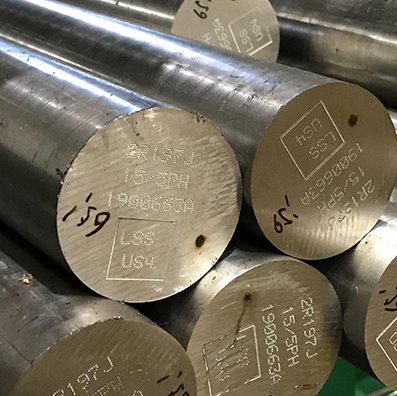
The composition of SUS316 is 18% by weight of chromium, 12% by weight of nickel, 2.5% by weight of molybdenum, and the remaining 67.5% by weight of iron.
In addition, SUS316L is a standard product with a lower carbon content than SUS316 and improved corrosion resistance.
Iron with improved corrosion resistance by adding molybdenum and chromium, but as you can see from the composition, it contains as much as 12% nickel, which is a typical metal that causes metal allergies. In addition, both iron and chromium are metals that easily cause metal allergies.
Is Surgical Stainless a Dangerous Material?
So how likely is surgical stainless steel to cause metal allergies?
This cannot be said unconditionally because there are individual differences, but the approximate tendency can be measured from the alloy composition of 18% chromium, 12% nickel, 2.5% molybdenum, and 67.5% iron.
It is more concerned with metal allergies and other metal corrosion problems than typical stainless steel (SUS304 = 18% chromium, 8% nickel, 74% iron).
In terms of iron-based alloys, it is a material that is inexpensive and considered for industrial mass production, and there are many stainless steels with improved corrosion resistance by increasing the amount of molybdenum and chromium.
Furthermore, if impurities are reduced as much as possible with a binary alloy of high-purity iron and high-purity chromium, the corrosion resistance will be further improved. Of course, the price of steel will be high.
Therefore, it can be said that surgical stainless steel is an inexpensive material that can be mass-produced and has a good balance of function and cost while ensuring a certain level of corrosion resistance as a practical steel material. ..
In fact, surgical stainless steel is used for things that come into contact with the living body for several hours, such as medical instruments, but surgical stainless steel is not used for things that are semi-permanently implanted in the living body, such as implants and artificial bones. There is none.
Titanium and tantalum, which have higher biocompatibility, are used as metal materials for implants and artificial bones.
Of course, if it is an accessory, even if you have a metal allergy, if you remove it, the symptoms will disappear, so it is not dangerous.
How safe is Surgical Stainless?
Although there are individual differences in the susceptibility to metal allergies for surgical stainless steel (SUS316L steel),
Much safer than cheap accessory materials such as brass, chrome and gold plating.
Safer than precious metal materials rich in copper, such as 925 silver and pink gold. Safer than general stainless steel.
Almost the same as general precious metals such as 18K gold and Platinum 900.
It is slightly inferior to precious metals that take metal allergies into consideration, such as 22K gold and palladium-free platinum.
It is inferior to titanium and other valve metals such as tantalum, hafnium, zirconium and niobium.
Roughly, this is the position. It can be said that the cost performance is excellent because it can deal with metal allergies close to precious metals at a price less than 1/10 of precious metals.
Which would you choose, Surgical Stainless or Titanium?
Titanium is safer than surgical stainless steel when considering metal allergies.
If titanium is pure titanium, the risk of metal allergies is extremely low. (However, in the case of titanium alloys, it is different because it reacts with other mixed metals. For details, see .)
However, surgical stainless steel has a brighter metal color than titanium. Surgical stainless and platinum are so similar that you can’t tell the difference in appearance. The only difference is that it weighs only one-third that of platinum.
Therefore, I think it is best to choose according to your design preference and the degree of metal allergy.
I think it’s a good idea to take a patch test for metal allergies. If you do not react to nickel, chrome, or iron, you should not have to worry about metal allergies with surgical stainless steel composed of them.
Reference column: Where should I go to test for metal allergies and what should I do?
If you want to completely eliminate the worry of metal allergies
At TOKYO DIAMOND, we make wedding rings that are 100% free from metal allergies for those who are suffering from metal allergies.
Here is a detailed summary of 17 years of research results such as materials and design, and the story of entrepreneurship.
→ How to choose a ring that does not cause metal allergies
Please read it.